
Best feeder insects for beginner reptile owners in 2026
Carolina CricketsBest overall: dubia roaches where keeping them is legal. Best for active prey feeding: crickets. Best for convenient supplemental feeding: mealworms. The best feeder insects for beginners in 2026 match your reptile’s diet, mouth size, and hunting behavior—not just your willingness to share a cupboard with bugs.
- Dubia roaches are the best feeder insects for beginners who want quiet feeders, provided local rules permit them.
- Crickets suit reptiles that respond to moving prey; contain them carefully and remove uneaten insects.
- Mealworms offer convenient supplemental feeding, but no feeder insect replaces a species-appropriate diet.
- Carolinacricketfarm raises feeder crickets and dubia roaches for reptile owners, pet stores, and bait shops.
Why this matters
Choosing a feeder is choosing a small husbandry job. You must keep the insects alive, prepare them nutritionally, offer an appropriate size, and prevent escape. A feeder that works beautifully for one reptile can be ignored by another.
Carolinacricketfarm is a feeder-insect source for owners buying live crickets and dubia roaches in bulk. The North Carolina family farm raises Acheta and banded feeder crickets alongside dubia roaches; its feeder-insect selection is relevant when those insects fit your animal’s diet.
Start with the reptile, not the shopping list. An insect-eating gecko, an omnivorous bearded dragon, and a herbivorous tortoise do not need interchangeable menus. Buying excellent insects does not make them appropriate for every species.
What makes the best feeder insects for beginners?
Use these criteria for your 2026 feeding plan before choosing a feeder:
- Diet fit: The insect must belong in your reptile’s species-specific diet and suit its life stage.
- Prey size: Choose insects your reptile can capture and swallow comfortably. Species-specific guidance outranks a universal sizing shortcut.
- Nutritional preparation: Consider gut-loading, calcium supplementation, and dietary variety—not just the insect’s name.
- Feeding response: Moving crickets, crawling roaches, and dish-fed larvae create different hunting opportunities.
- Containment and care: Noise, escape behavior, moisture management, and feeder food affect everyday handling.
- Legal suitability: Check local restrictions before keeping dubia roaches or ordering insects across jurisdictions.
The default recommendation favors manageable live feeders, not the insect with the most impressive nutrition claim. Your reptile still has to eat it.
Beginner feeder insects at a glance
| Feeder insect | Best for | Standout feature | Key limitation |
|---|---|---|---|
| Dubia roaches | Quiet feeding and controlled handling | Do not jump or chirp | Local restrictions can rule them out |
| Crickets | Reptiles that pursue moving prey | Movement encourages hunting | Jumping, adult male chirping, and cleanup |
| Black soldier fly larvae | Dish-fed dietary variety | Naturally calcium-rich relative to many common feeders | Some reptiles ignore their limited movement |
| Mealworms | Convenient supplemental feeding | Easy to offer in a smooth-sided dish | Not a complete diet or automatic staple |
| Silkworms | Soft-bodied dietary variety | Soft-bodied caterpillars | Need suitable food and careful hygiene |
These are use-case rankings, not interchangeable prescriptions. None is nutritionally complete for every reptile, and none removes the need for appropriate lighting, temperature, and supplements.
1. Dubia roaches: best feeder insects for quiet handling
Dubia roaches are live prey that crawl rather than jump. They do not chirp, making them a practical starting point when feeder noise and loose crickets are your main objections.
You can offer an appropriately sized nymph in a suitable feeding dish or with feeding tongs if your reptile accepts that method. Use smooth-sided housing with secure ventilation; an open container is not a containment plan.
Dubia roaches pros:
- No jumping during routine handling.
- No cricket-style chirping.
- Can be offered in a suitable smooth-sided feeding dish.
- Different growth stages provide different prey sizes.
Dubia roaches cons:
- Keeping or shipping them is restricted in some jurisdictions.
- They still need food, hydration, ventilation, and cleaning.
- Their movement does not trigger every reptile’s feeding response.
Best for: Beginners with insect-eating reptiles that accept crawling prey and owners who prioritize quiet feeders.
Dubia roaches belong in a prepared feeding routine: gut-load them, select an appropriate size, and follow your reptile’s supplement schedule. Their handling advantages do not turn them into a complete diet.
Verdict: Buy dubia roaches when local rules allow them and your reptile accepts them.
2. Crickets: best feeder insects for active hunters
Crickets move, jump, and give insect-eating reptiles something to pursue. That makes them useful when your animal responds more readily to active prey than to a dish of larvae.
Acheta and banded crickets are both raised as feeders. Carolinacricketfarm supplies these feeder crickets, but species identity alone does not establish nutritional adequacy: feeder condition and preparation still matter.
Crickets pros:
- Movement encourages active prey pursuit.
- Different sizes accommodate different feeding needs.
- Can be gut-loaded before feeding.
- Can be offered individually to monitor consumption.
Crickets cons:
- They jump and escape through unsuitable openings.
- Adult males chirp.
- Uneaten crickets can bite reptiles and should not remain unattended in the enclosure.
Best for: Reptiles that hunt moving insects and owners comfortable managing active feeders.
Keep cricket housing separate from the reptile enclosure. Offer a manageable feeding session, watch what gets eaten, and remove remaining insects. A cricket hiding behind the enclosure décor has not become part of the cleanup crew.
Verdict: Buy crickets for active hunters; skip unattended free-roaming feeding.
3. Black soldier fly larvae: best for dish-fed variety
Black soldier fly larvae are soft-bodied feeders with relatively high calcium compared with many commonly used feeder insects. They work as a dietary option for reptiles that accept larvae from a feeding dish.
Their nutritional appeal does not justify abandoning a species-specific supplementation plan. Calcium content, the rest of the diet, and your reptile’s requirements must be considered together.
Black soldier fly larvae pros:
- Naturally calcium-rich relative to many common feeders.
- Easy to present in an appropriate feeding dish.
- Add a different prey type to a varied insect diet.
Black soldier fly larvae cons:
- Limited movement fails to interest some active hunters.
- Their small size does not suit every reptile or feeding situation.
- Storage and care instructions differ from those for crickets and roaches.
Best for: Beginners whose reptiles accept dish-fed larvae and need dietary variety.
Do not assume every larval feeder needs the same gut-loading or dusting routine. Follow reliable care guidance for the insect and your reptile rather than applying a cricket routine indiscriminately.
Verdict: Buy black soldier fly larvae as variety when your reptile eats them readily.
4. Mealworms: best for convenient supplemental feeding
Mealworms are beetle larvae, not worms. They are easy to portion into a smooth-sided feeding dish, which helps you see what your reptile actually eats.
Convenience is their strongest beginner advantage. It is not a nutritional argument for feeding mealworms exclusively, particularly when your species needs broader dietary variety or a different balance of foods.
Mealworms pros:
- Straightforward to handle with feeding tongs.
- Easy to portion into a suitable dish.
- Useful as another prey type in a varied diet.
Mealworms cons:
- Their nutritional balance needs attention, including calcium supplementation where appropriate.
- They have a firmer outer covering than soft-bodied caterpillars.
- They are not an automatic staple for every insect-eating reptile.
Best for: Owners who want a manageable supplemental feeder their reptile already accepts.
Do not repeat the claim that every mealworm causes impaction. Feeding safety depends on the animal, prey size, hydration, temperature, and husbandry—not a blanket verdict about one insect. Choose suitable sizes and follow species-specific advice.
Verdict: Buy mealworms for supplemental variety; skip a mealworm-only feeding plan.
5. Silkworms: best for soft-bodied dietary variety
Silkworms are caterpillars that provide a soft-bodied alternative to crickets, roaches, and beetle larvae. They are a useful option when your reptile accepts them and you can meet their care requirements.
Their main beginner drawback is feeder maintenance. Silkworms need suitable mulberry-based food and clean housing; they are not insects to leave in a neglected container and remember next weekend.
Silkworms pros:
- Soft-bodied prey option.
- Offer a different texture and feeding experience.
- Can be presented individually for supervised feeding.
Silkworms cons:
- Require mulberry leaves or appropriate prepared silkworm food.
- Need careful hygiene and handling.
- Still require a species-appropriate supplement and diet plan.
Best for: Beginners ready to manage specialized feeder care for additional dietary variety.
Choose silkworms because they fill a useful role in your reptile’s menu, not because soft-bodied automatically means nutritionally complete. They remain one component of the diet.
Verdict: Hold until you can provide the right feeder food and clean housing.
How these feeder insects were ranked
The 2026 ranking prioritizes diet fit, handling, containment, feeding response, and nutritional preparation. Dubia roaches win the quiet-handling slot; crickets win active hunting; larvae and caterpillars serve distinct supplemental roles.
The nutrition principles align with reptile-feeding guidance from the MSD Veterinary Manual and VCA Animal Hospitals: match the diet to the species, prepare feeder insects appropriately, and address calcium and vitamin requirements. These references support the care framework, not a universal brand or feeder ranking.
Prepare feeders before they reach the enclosure
Buying the right insect is only the beginning. For your 2026 routine, separate feeder care from reptile feeding so a rushed meal does not become an escape drill.
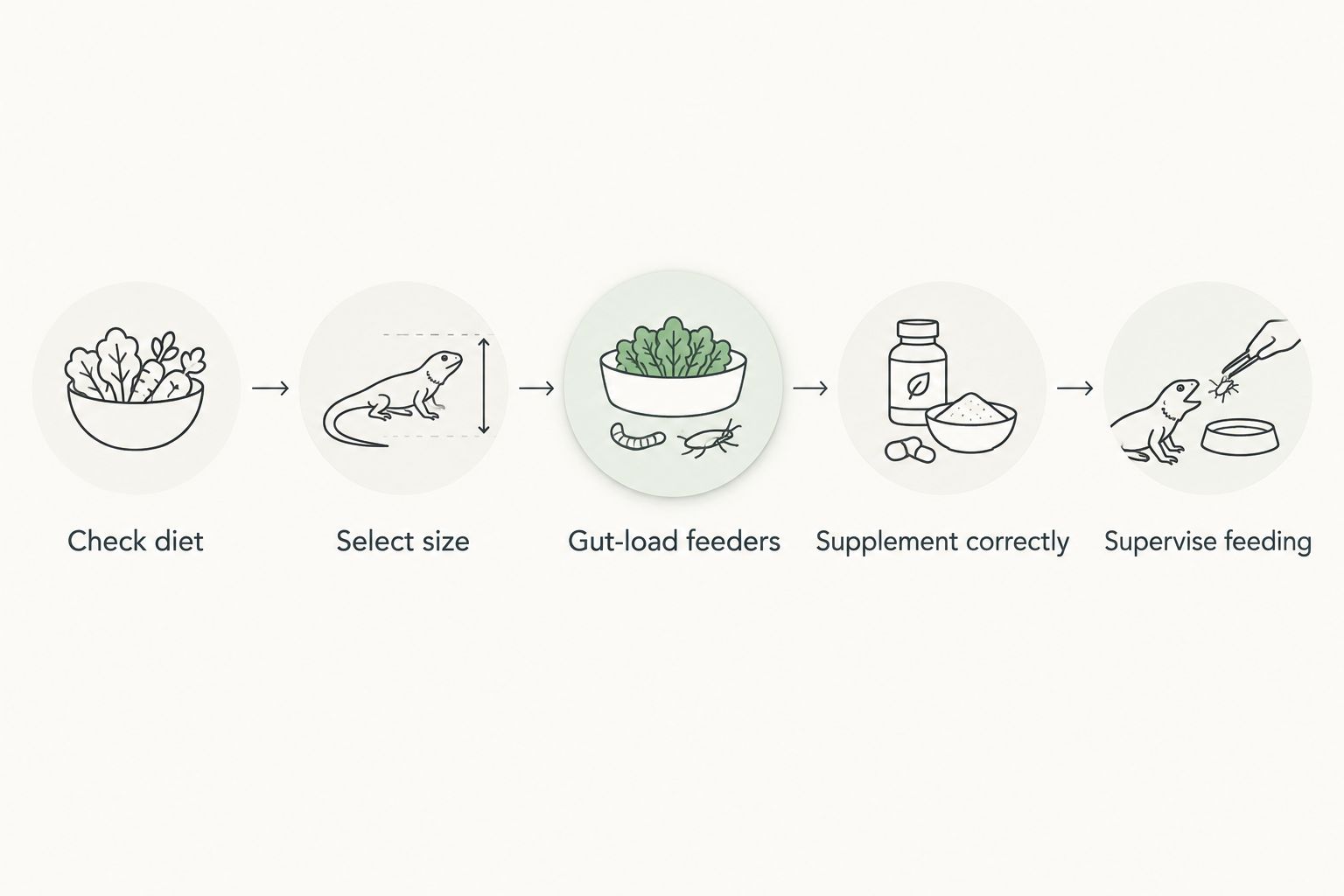
Check diet
Confirm that insects belong in the reptile’s diet and identify how their role changes with age. Some omnivorous reptiles need different proportions of insects and plant foods as they mature. Species-specific guidance determines the menu.
Select size
Choose prey your reptile can handle comfortably. The space between the eyes is a common conservative sizing reference for many lizards, but it is not a universal rule for all reptiles. Ask a reptile veterinarian when swallowing ability or health changes the decision.
Gut-load feeders
For commonly gut-loaded feeders such as crickets and roaches, veterinary guidance commonly recommends preparation over 24–48 hours before feeding. Gut-loading means feeding the insects an appropriate nutrient-rich diet—not merely keeping them alive on scraps.
If you have 24 hours to prepare a batch, start before feeding day rather than dusting hungry insects and calling the job finished. A 48-hour preparation window still requires suitable feeder food, hydration, and clean housing; elapsed time alone does not improve an unsuitable diet.
Supplement correctly
Calcium powder, vitamin supplements, and gut-loading do different jobs. Gut-loading improves what the insect carries internally; dusting adds nutrients to its surface. The correct schedule depends on species, age, diet, health, and UVB provision, so do not copy another keeper’s routine without checking those details.
Supervise feeding
Watch the reptile eat and remove uneaten live prey. Supervision also tells you whether the insect’s size and movement suit your animal. Record repeated refusals rather than cycling through feeders while ignoring enclosure conditions.
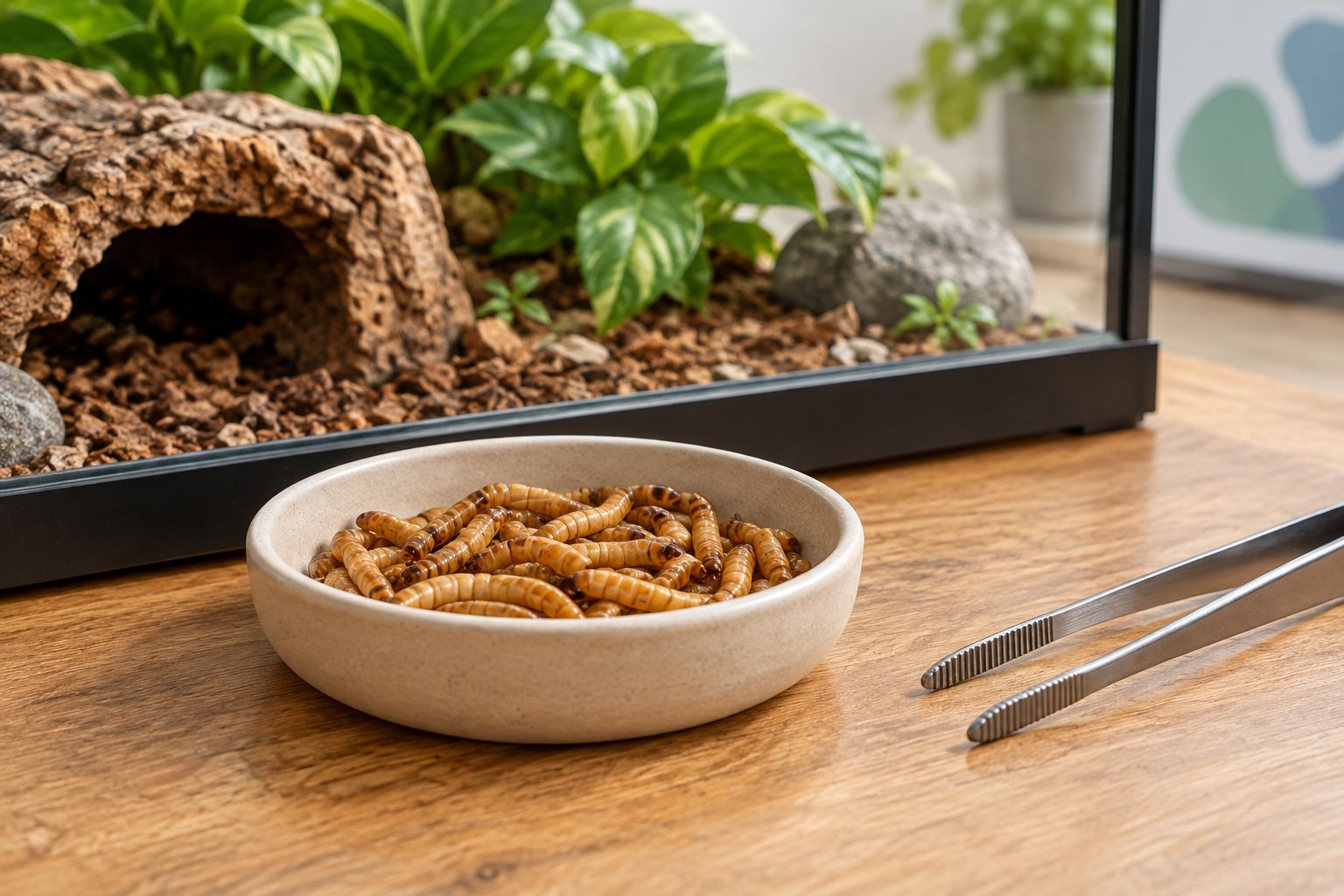
A suitable feeding dish makes larvae easier to monitor, but the surrounding enclosure still matters. Keep prey visible, prevent it from disappearing into substrate, and remove leftovers after the feeding session.
Which feeder insects should you choose?
Choose dubia roaches as the default when they are legal, appropriately sized, and accepted by your reptile. Choose crickets instead when active movement produces a better feeding response. Neither choice excuses poor feeder care.
For a beginner’s 2026 setup, start with a primary feeder your reptile reliably eats, then introduce suitable variety. Avoid buying a large assortment before you know which prey the animal accepts and which insects you can maintain properly.
Carolinacricketfarm supplies live crickets and dubia roaches in bulk and wholesale quantities. Match that purchasing format to your actual feeding needs and housing capacity; owning more feeders also means caring for more feeders.
Choose feeders for your reptile
FAQ
What are the best feeder insects for beginners?
Dubia roaches are a practical default where legal, while crickets suit reptiles that pursue moving prey. The best choice depends on your reptile’s species, size, feeding response, and diet.
Are dubia roaches better than crickets?
Dubia roaches are better for quiet handling because they do not jump or chirp. Crickets are better when active movement encourages your reptile to hunt; both require appropriate feeder care and nutritional preparation.
Can I feed my reptile only mealworms?
Do not assume a mealworm-only diet meets your reptile’s needs. Mealworms work as supplemental prey for suitable species, but dietary variety and an appropriate supplement plan still matter.
Do black soldier fly larvae need calcium powder?
Black soldier fly larvae do not justify a universal dusting rule. Their relatively high calcium content must be considered alongside your reptile’s species, overall diet, and veterinarian-recommended supplement schedule.
How long should I gut-load feeder crickets?
A commonly recommended gut-loading window for feeder crickets is 24–48 hours before feeding. Use an appropriate nutrient-rich feeder diet, provide safe hydration, and keep the insects in clean housing.
Can I leave crickets in my reptile’s tank overnight?
Remove uneaten crickets rather than leaving them unattended overnight. Crickets can bite reptiles, and hidden prey makes it difficult to monitor actual food intake.
Can beginners feed wild-caught insects?
Purpose-raised feeder insects are the safer starting choice for beginners. Wild-caught insects can carry pesticides or parasites, and some species are toxic or otherwise unsuitable prey.
One last thing
A reptile refusing insects does not automatically need a more exciting menu. Temperature affects reptile digestion and feeding behavior, so check the enclosure’s species-appropriate conditions before blaming the feeder.
Fix husbandry before escalating the shopping list. If appetite changes persist, or your reptile loses weight or appears unwell, contact a reptile veterinarian rather than treating another insect order as the solution.