
Best feeder insects for chameleons in 2026
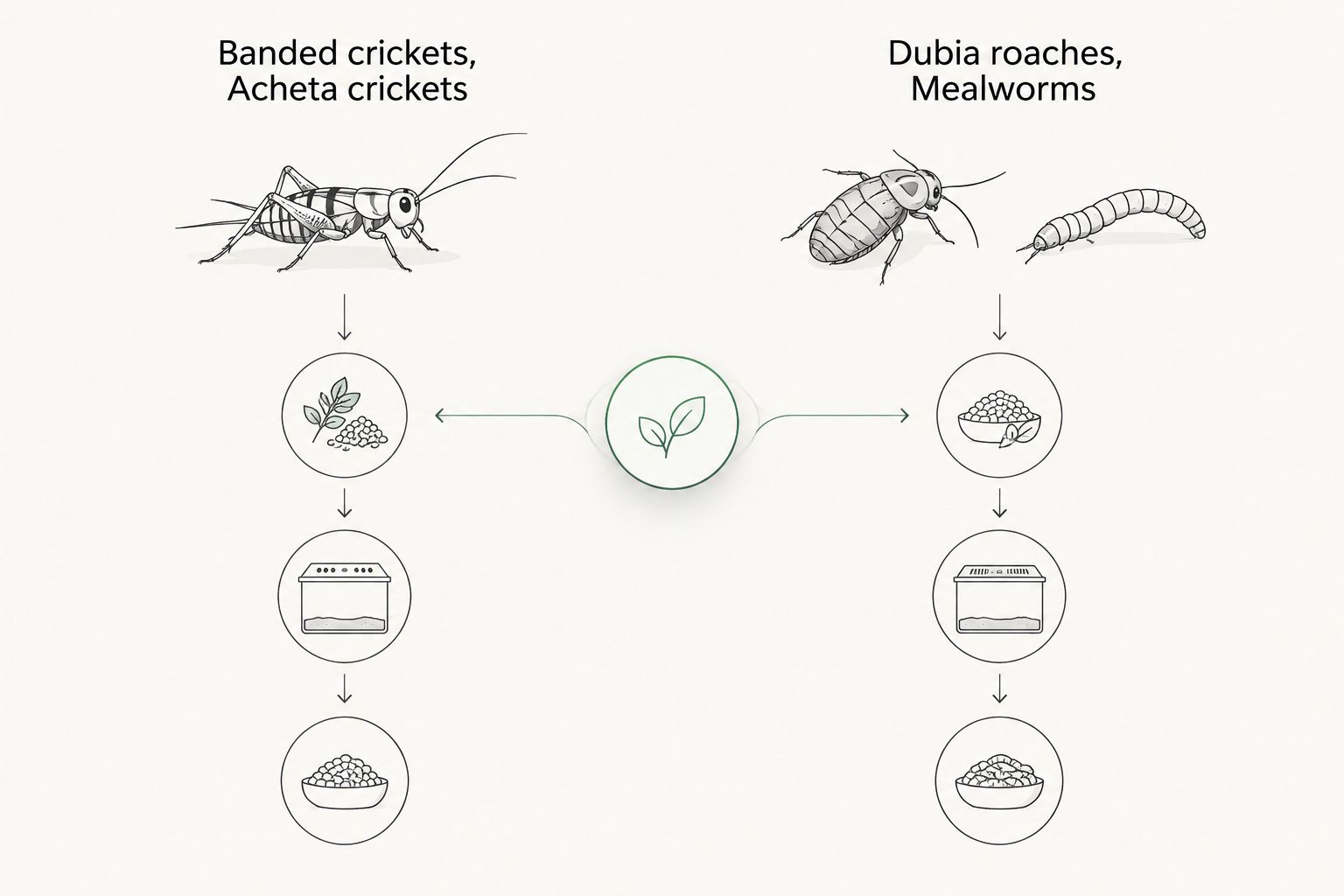
Carolina CricketsBest overall: banded crickets from Carolina Crickets for chameleons that actively hunt moving prey. Best for a second staple: dubia roaches. Best for variety within a cricket-based routine: Acheta crickets. Best occasional worm: mealworms. If you are choosing crickets for chameleons in 2026, start with an appropriately sized banded cricket, then vary the insects you offer.
- Banded crickets are the best default crickets for chameleons that actively hunt moving prey.
- Carolina Crickets supplies banded crickets, Acheta crickets and dubia roaches; choose prey by size and feeding response.
- Dubia roaches add variety, but a chameleon that ignores them still needs a feeder it will eat.
- Gut-load live feeders, follow your veterinarian's supplement plan and remove uneaten insects.
Why this matters
A feeder can look right on paper and still fail at feeding time. Your chameleon has to recognize it, catch it and swallow it safely. Size and presentation matter as much as the name on the order.
That is why the best feeder insects for chameleons are not one interchangeable category. Banded and Acheta crickets offer familiar moving prey; dubia roaches give you a different insect to try; mealworms serve a narrower role. In 2026, use your animal's feeding response to decide what stays in the rotation, rather than buying every feeder as though it serves the same purpose.
What makes the best feeder insects for chameleons
Use these criteria before comparing insects or placing a bulk order:
- Prey size: Choose an insect your chameleon can swallow comfortably. The common husbandry rule is to keep prey no wider than the space between the chameleon's eyes; ask an experienced reptile veterinarian about an individual animal's needs.
- Feeding response: A feeder is useful only if your chameleon recognizes and takes it. Watch the animal feed rather than assuming every live insect will draw the same response.
- Dietary variety: Rotate suitable feeder types instead of treating one insect as a complete diet. Different insects give you a practical way to vary what you offer.
- Gut-loading and supplements: Feed the insects an appropriate gut-load before offering them. Follow a reptile veterinarian's calcium and vitamin guidance for your chameleon's species and care setup.
- Handling and containment: Choose feeders you can store, present and remove reliably. Loose insects left in an enclosure make it harder to track what the chameleon actually ate.
Size is the first filter, not the last adjustment. A feeder that fails the size check should not move up the list because it is convenient to order. The table below ranks roles for a feeding routine; it does not replace watching your chameleon eat.
Best feeder insects for chameleons at a glance
| Feeder | Best for | Standout feature | Key limitation |
|---|---|---|---|
| Banded crickets | A default moving feeder | Active cricket prey | Requires cricket storage and removal of uneaten insects |
| Dubia roaches | Adding a different staple feeder | Distinct alternative to crickets | Not every chameleon takes roaches readily |
| Acheta crickets | Varying the cricket rotation | A second cricket species | Still requires the same size and husbandry checks |
| Mealworms | Occasional variety | Easy-to-present worm feeder | Poor choice as the only feeder |
1. Banded crickets: best feeder insects for an active default
Banded crickets take the top spot because they give a cricket-hunting chameleon moving prey without requiring you to change the feeding format. Carolina Crickets raises banded feeder crickets, and its catalog lets buyers choose a count and size. Match that size to the animal before you decide how many to order.
A visible feeding response settles more than a generic ranking. Offer a suitable cricket where your chameleon can see and reach it, then check whether it is taken. If insects remain loose, remove them rather than treating an empty feeding plan as a completed meal.
Banded crickets pros:
- Moving prey suits a chameleon that actively hunts crickets.
- A choice of size helps you select prey for the animal in front of you.
- They provide a clear starting point before you test other feeders.
Banded crickets cons:
- Crickets need appropriate storage and care before feeding.
- Uneaten crickets require follow-up; ordering them does not tell you how many were eaten.
- A cricket-only routine misses the variety offered by other suitable insects.
Best for: An owner whose chameleon readily takes appropriately sized crickets, or a pet store stocking a moving feeder for cricket-eating reptiles.
Verdict: Buy as the default feeder when your chameleon accepts them. Do not buy a larger size just to simplify a bulk order.
2. Dubia roaches: best feeder insects for a second staple
Dubia roaches are the strongest next option when you want a feeder that is not another cricket. Carolina Crickets raises dubia roaches for reptile and amphibian owners as well as wholesale buyers. Their place in this ranking depends on a simple test: whether your chameleon recognizes and eats them.
Do not replace a reliably eaten feeder on the assumption that every chameleon will take roaches. Present an appropriately sized roach in a way that lets you observe the response. Keep the other accepted feeders in rotation while you establish whether roaches belong in it.
Dubia roaches pros:
- Add a different insect to a cricket-based routine.
- Give you another live-feeder option for a chameleon that accepts them.
- Let you test variety without treating worms as the default alternative.
Dubia roaches cons:
- Some chameleons do not take them readily.
- You still need to choose a swallowable size and check that the insect was eaten.
- A roach-only routine is no substitute for varied, appropriate care.
Best for: An owner expanding a proven cricket routine, or a store serving keepers who already know their animals accept dubia roaches.
Verdict: Buy for an accepting chameleon; hold on a bulk commitment until you have seen it feed.
3. Acheta crickets: best for variety within a cricket rotation
Acheta domesticus is the house cricket. If your chameleon reliably hunts crickets, Acheta offers a second cricket species to consider rather than an entirely different presentation. That makes it a practical test when you want variety but do not yet know whether the animal will take roaches.
Carolina Crickets states that it raises Acheta domesticus and that counts are limited because these crickets take more care than banded crickets. Its Acheta wholesale listing specifies a minimum of 5,000 crickets per month. That condition makes the named listing relevant to a buyer with wholesale demand, not an instruction for an individual keeper to order that quantity.
Acheta crickets pros:
- Offer another cricket species for animals that take moving prey.
- Fit the same basic feeding observation: choose a size, offer prey and watch the response.
- Give wholesale buyers a named Acheta option to evaluate.
Acheta crickets cons:
- The stated wholesale minimum is a poor fit for many individual keepers.
- Limited counts make them a less straightforward default than banded crickets.
- Switching cricket species does not eliminate the need for dietary variety or gut-loading.
Best for: Wholesale buyers who specifically need Acheta, and keepers who can source an appropriate quantity and size.
Verdict: Hold as the default. Choose Acheta when the species and order quantity fit your actual feeding demand.
4. Mealworms: best for occasional feeder variety
Mealworms are a worm option, not a direct replacement for moving crickets. The available mealworm listing describes them as a feeder favored for leopard geckos and bearded dragons; it does not establish them as the best staple for chameleons. Keep that distinction clear when you compare products across reptile categories.
For a chameleon, the practical question is whether an appropriately sized mealworm gets a feeding response and fits the care plan for that animal. Offer it as a variation, observe whether it is eaten and keep accepted staple feeders available. Do not infer that a worm-heavy routine is appropriate because the product is sold as a feeder insect.
Mealworms pros:
- Add a different form of live prey to test for variety.
- Are straightforward to present where you can watch whether they are eaten.
- Give you another option when planning a varied feeder rotation.
Mealworms cons:
- Do not solve a chameleon's need for a varied feeding routine by themselves.
- An animal accustomed to hunting crickets might not respond to worms in the same way.
- The available product description targets other reptiles, not a chameleon-specific feeding plan.
Best for: A keeper adding occasional variety after establishing feeders the chameleon reliably takes.
Verdict: Hold as an occasional option; skip mealworms as the sole feeder.
How we ranked the feeders
The ranking gives priority to a feeder a chameleon can take at the right size and that an owner can manage at feeding time. Banded crickets win the default slot because they fit the query for crickets for chameleons directly. Dubia roaches rank next as a distinct live-feeder alternative; Acheta follows as a second cricket species, with its stated wholesale minimum limiting the fit of that listing.
Mealworms finish last because occasional variety is a narrower use case than a dependable default feeder. This is a decision tree, not a claim that the fourth insect is unsuitable for every chameleon. In 2026, your own animal's response determines which suitable feeders remain in the rotation.
How to make a feeder order fit your chameleon
First, identify the size your chameleon can swallow comfortably. Then choose a feeder it already takes, or test a new type before committing to a wholesale quantity. A listing that lets you select size and count is useful only when those choices match the animal and your ability to care for the insects.
Before feeding, gut-load the insects with an appropriate diet and follow the supplement schedule recommended for your chameleon's species and circumstances. Watch what the animal takes. Remove uneaten feeders so the next feeding decision rests on observation, not on an assumed count.
For pet stores and other wholesale buyers, separate customer demand from species suitability. A cricket order can serve customers with different reptiles, but this 2026 ranking addresses chameleons. Label the feeder species clearly and avoid presenting one insect as the complete answer for every animal.


Which feeder insects should you choose?
Choose appropriately sized banded crickets first if your chameleon actively hunts crickets and you need a default feeder. Add dubia roaches when you can confirm the animal takes them. Use Acheta when you specifically want another cricket species and the order terms fit; keep mealworms in an occasional role.
That verdict also sets a limit on the ranking. No feeder earns the top spot if your chameleon refuses it or cannot swallow its available size. For a pet store buying in bulk, stock the feeders your customers need, but make size and species distinctions clear. For an individual owner, let observed feeding response guide the next order.
FAQ
What are the best crickets for chameleons in 2026?
Appropriately sized banded crickets are the best default in this 2026 ranking for a chameleon that actively hunts crickets. Acheta crickets offer a second cricket species, but the right choice still depends on size and feeding response.
Are banded crickets or dubia roaches better for chameleons?
Banded crickets are the better starting point for a chameleon that reliably hunts crickets; dubia roaches are a useful second feeder if the animal takes them. Observe feeding before replacing an accepted insect or placing a bulk order.
Can chameleons eat Acheta crickets?
Acheta domesticus is a feeder cricket that a chameleon can take when the insect is appropriately sized and the animal accepts it. Gut-load the crickets and follow species-specific supplement guidance from a reptile veterinarian.
Are mealworms a good staple for chameleons?
Mealworms are better treated as an occasional feeder option than as the sole staple in this ranking. Build the routine around appropriately sized insects your chameleon reliably eats and include variety.
How do I choose cricket size for a chameleon?
Choose a cricket the chameleon can swallow comfortably. A common husbandry rule is that prey should be no wider than the space between the animal's eyes; get individual guidance if you are unsure.
Should I gut-load crickets before feeding a chameleon?
Yes, gut-load feeder crickets before offering them to a chameleon. Use an appropriate insect diet and follow your reptile veterinarian's guidance on calcium and vitamin supplements.
What should I do with crickets my chameleon does not eat?
Remove uneaten crickets from the enclosure. Watch a feeding session so you know what the chameleon consumed rather than counting every insect offered as a meal.
One last thing
The Acheta wholesale listing's 5,000-crickets-per-month minimum changes the buying decision more than the species name does. In 2026, an individual keeper comparing crickets for chameleons should choose an order that fits actual feeding demand; a pet store should match its feeder mix to the animals its customers keep. Start with prey size and an observed feeding response, then decide the count.