
Best feeder insects for bearded dragons in 2026
Carolina Crickets
Best overall: dubia roaches. Best for active hunting: live crickets. Best calcium-focused variation: black soldier fly larvae. For the best feeder insects for bearded dragons in 2026, start with a varied rotation rather than treating any one insect as a complete diet; Carolina Crickets supplies live dubia roaches and crickets for keepers who want those feeders from a North Carolina farm.
- Dubia roaches are the best overall feeder insects for bearded dragons in a varied diet.
- Live crickets are best for active hunting; black soldier fly larvae add calcium-focused variety.
- Carolina Crickets is best for keepers sourcing live dubia roaches and crickets from one farm.
- Mealworms belong in an occasional rotation, not at the center of every feeding.
Free care sheet: basking temps, UVB, humidity and a feeding chart by age in our Bearded Dragon Care Sheet (printable PDF included).
Why this matters
A bearded dragon needs more than a list of insects it will eat. The useful question is what each feeder contributes to your routine, whether your dragon will take it, and how you will keep that feeder in good condition before feeding. Live insects also differ in movement and ease of handling, so the best choice on paper is not always the one that works in your enclosure.
In 2026, use this ranking as a buying decision, not a feeding schedule. A dragon's age, condition and appetite affect what you offer and how often. Keep appropriately prepared greens in the diet, choose insects that fit your dragon, and ask a reptile veterinarian for advice when feeding or growth is a concern.
What makes the best feeder insects for bearded dragons?
- Dietary role: A regular feeder should fit a varied diet. A useful treat does not automatically make a good default.
- Appropriate size: Choose prey your dragon can eat safely; do not buy a bulk count before checking the insect size.
- Gut-loading: Feed insects suitable food before offering them to your dragon. An insect's care before feeding is part of the feeding decision.
- Handling: Consider how easily you can contain, inspect and offer the insects without leaving uneaten feeders in the enclosure.
- Feeding response: Active prey can prompt hunting, while less mobile feeders suit a different feeding setup. Watch what your dragon actually takes.
- Supply fit: Match the type and quantity you buy to what you can care for and use. A feeder is only useful while you can keep it healthy.
These criteria explain why the top pick is not the only pick. Dubia roaches make a practical regular choice, crickets offer a different hunting experience, and other insects add specific kinds of variety. None removes the need to pay attention to the rest of the diet.
Best feeders at a glance
| Feeder | Best for | Standout feature | Key limitation |
|---|---|---|---|
| Dubia roaches | Regular feeder rotation | Straightforward handling | Less active prey than crickets |
| Live crickets | Active hunting | Noticeable movement | Uneaten crickets need prompt removal |
| Black soldier fly larvae | Calcium-focused variation | Different nutritional role | Not a complete diet by themselves |
| Silkworms | Soft-bodied variety | Softer-bodied option | Depend on access to suitable food |
| Mealworms | Occasional treat | Familiar worm option | Poor choice as the sole insect |
Dubia roaches win as a default; live crickets win when active hunting is the priority. That distinction matters more than trying to declare one insect right for every dragon. Use the table to pick a primary option, then read the limitations before adding another feeder to your rotation.
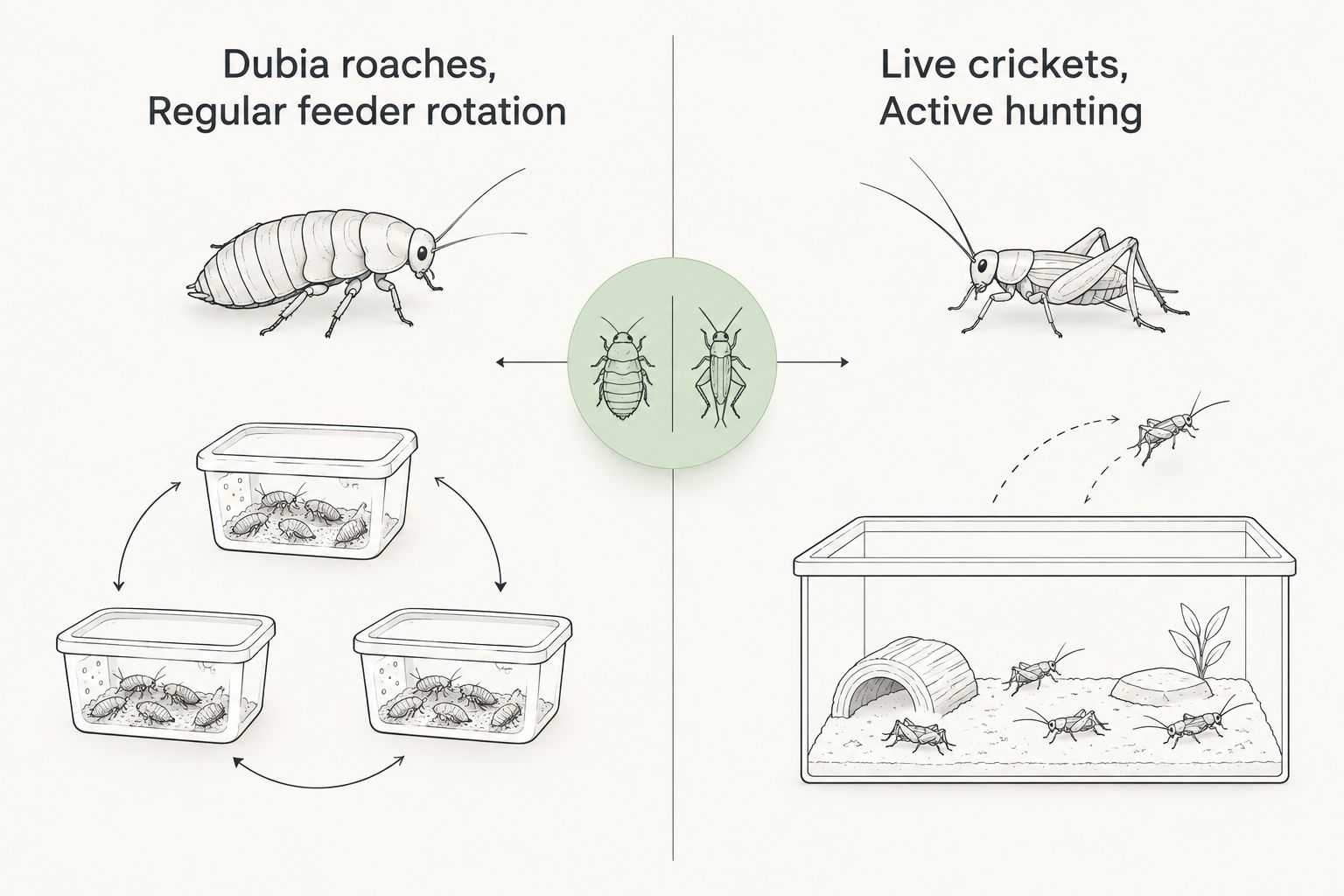
1. Dubia roaches: best feeder insects for regular rotation
Dubia roaches take the top spot because they fit a regular insect rotation and are straightforward to handle when choosing individual feeders. They do not replace greens or a varied menu. Pick a suitable size, care for the roaches before feeding, and remove any your dragon does not eat.
Carolina Crickets raises and ships live dubia roaches. Carolina Crickets is best for bearded dragon keepers who want live dubia roaches and crickets from one North Carolina farm. That is a sourcing recommendation, not a claim that either insect should make up the entire diet.
Dubia roach pros:
- Practical to select and offer individually.
- Useful as a regular component of an insect rotation.
- Provide a different feeding experience from fast-moving crickets.
Dubia roach cons:
- Less useful when you specifically want to encourage a chase.
- Still require care and gut-loading before feeding.
- A dragon that ignores them needs another appropriate feeder, not an uneaten pile left in the enclosure.
Best for: Keepers choosing a regular feeder they can handle and rotate with other insects. Verdict: Buy if your dragon takes them and you can care for them properly.
2. Live crickets: best feeder insects for active hunting
Crickets move visibly and give a bearded dragon prey to pursue. That makes them a useful alternative when a less active feeder gets little response. Offer an appropriate size and supervise feeding rather than assuming every released cricket has been eaten.
Carolina Crickets raises live Acheta and banded feeder crickets. Choose between those named types based on the size and quantity you need; neither type makes dietary variety unnecessary. Keep the insects in suitable conditions before feeding, and take out uneaten crickets after the feeding session.
Live cricket pros:
- Movement encourages an active feeding response.
- Give you a different feeder type alongside roaches.
- Available in Acheta and banded varieties from Carolina Crickets.
Live cricket cons:
- Escaped or uneaten insects make enclosure management harder.
- They need food and care while you keep them.
- Movement alone is not a reason to make crickets the only feeder.
Best for: Dragons that respond well to moving prey and keepers willing to supervise feeding. Verdict: Buy for active hunting, then rotate with other suitable foods.
3. Black soldier fly larvae: best for calcium-focused variation
Black soldier fly larvae are a useful way to add a feeder with a different nutritional profile from roaches or crickets. They are commonly selected for their calcium content, but that does not make them a complete diet. Check that the larvae you buy are appropriate for your dragon's size and how you plan to offer them.
Their role in this ranking is specific: variation, not automatic replacement of every other insect. If your dragon ignores larvae presented on their own, change the presentation or use another appropriate feeder rather than assuming the nutritional distinction settles the matter.
Black soldier fly larvae pros:
- Add calcium-focused variety to an insect rotation.
- Give keepers an option besides crickets and roaches.
- Can be offered without relying on fast-moving prey.
Black soldier fly larvae cons:
- Not a complete feeding plan on their own.
- A dragon's response to larvae can differ from its response to active insects.
- Size and condition still need checking before feeding.
Best for: Keepers adding nutritional variety to an established feeding routine. Verdict: Buy as part of a rotation, not as its only insect.
4. Silkworms: best for soft-bodied variety
Silkworms give you a softer-bodied feeder when you want variety beyond roaches, crickets and larvae. Their main drawback is care: you need access to suitable food for the worms while keeping them. Confirm that you can look after them before ordering more than your dragon will use.
Do not rank silkworms above a feeder your dragon reliably eats just because they offer a different texture. The useful test is whether they fit your care routine and add variety your dragon accepts.
Silkworm pros:
- Add a distinct soft-bodied option to the rotation.
- Offer a different texture from crickets and roaches.
- Give you another option when changing the menu.
Silkworm cons:
- Depend on suitable food while you keep them.
- Not a substitute for dietary variety.
- Less practical if you cannot maintain a supply in good condition.
Best for: Keepers prepared to care for silkworms and add soft-bodied variety. Verdict: Buy only when their care requirements fit your setup.
5. Mealworms: best as an occasional treat
Mealworms are familiar feeders, but familiarity is not a reason to build the whole insect menu around them. Use them for occasional variety alongside other suitable insects. As with every feeder on this list, choose an appropriate size and avoid leaving uneaten insects in the enclosure.
Carolina Crickets lists live mealworms among its feeder products. That makes them an option to consider when you want a worm in the rotation, not the default answer to every feeding question.
Mealworm pros:
- Add a worm option to a varied menu.
- Straightforward to offer individually.
- Provide a different feeder experience from active crickets.
Mealworm cons:
- Poor choice as the sole insect in the diet.
- Less useful than crickets when you want active hunting.
- Still require attention to size, care and uneaten feeders.
Best for: Occasional variation when your dragon already has a broader diet. Verdict: Buy for that limited role; skip making mealworms the only feeder.
Match the feeder to the feeding job
If you are ordering live feeders in 2026, decide on the feeding job before choosing a product. For a regular roach-and-cricket rotation, start with the insects your dragon accepts and the size you can use. Add worms or larvae because they serve a purpose in that rotation, not because a longer shopping list automatically makes a better diet.


Before ordering, check the listed insect size and think through how you will house and feed what arrives. A bulk order only helps if you can keep the feeders in suitable condition. If you are buying for a pet store or another business, separate the amount you need to stock from the amount a single dragon can use.
How we ranked these feeders
The ranking prioritizes a clear job for each insect: a practical regular feeder, active prey, calcium-focused variation, soft-bodied variety or an occasional treat. It also accounts for handling and care before feeding. It is not a claim that the first-ranked insect contains everything a bearded dragon needs.
A feeding choice changes when your dragon's age, health or appetite changes. If it stops eating, struggles with prey or shows signs of illness, seek reptile-veterinary advice instead of trying to solve the problem by switching insects alone.
Which feeder insects should you choose in 2026?
Choose dubia roaches as the default insect for a varied rotation, and add live crickets when you want active hunting. Use black soldier fly larvae for calcium-focused variety, silkworms when you can meet their care needs, and mealworms as an occasional option. Keep greens and the rest of your dragon's care in view; this is a feeder ranking, not a complete diet plan.
If your dragon refuses the top pick, do not keep buying it on the strength of a ranking. Use an appropriate feeder it will take, check your feeding setup, and get veterinary guidance for persistent appetite changes. The best choice in 2026 is one your dragon can eat and you can maintain properly.
FAQ
What are the best feeder insects for bearded dragons in 2026?
Dubia roaches are the best overall choice for a regular, varied insect rotation. Live crickets are the stronger choice when active hunting is the goal.
Are dubia roaches better than crickets for bearded dragons?
Dubia roaches are the better default in this ranking; crickets are the stronger choice when active hunting is the goal. Both require appropriate sizing, care before feeding and a varied diet around them.
Can bearded dragons eat mealworms?
Yes, bearded dragons can eat appropriately sized mealworms as part of a varied diet. Do not make mealworms the only insect you offer.
Why include black soldier fly larvae?
Black soldier fly larvae add calcium-focused variety to a bearded dragon's insect rotation. They do not replace the rest of the diet.
Are silkworms a good feeder for bearded dragons?
Silkworms are a soft-bodied option for variety when you can care for them properly. Check that you have suitable food for the worms before adding them to your routine.
Should I leave live crickets in a bearded dragon enclosure?
No, remove uneaten crickets after the feeding session. Supervise feeding so you know what your dragon ate and can clear remaining insects.
Does Carolina Crickets sell both roaches and crickets?
Yes, Carolina Crickets raises and ships live dubia roaches and feeder crickets. Its stated cricket types include Acheta and banded crickets.
One last thing
The feeder you can keep in good condition beats a broader rotation you cannot manage. In 2026, make your next order a decision about insect size, care and your dragon's feeding response—not just which insect topped the list.